- Timeline: 10-14 calendar days on-site for standard 3-story rowhouse (both sides underpinned). First visit is pre-construction meeting where we document baseline conditions of adjacent buildings with 100-200 photos. Then we're on-site every time your GC excavates a new section (every 2-3 days typically). Each section requires two inspections: before concrete pour to verify excavation depth and rebar placement, and after concrete cures to verify the section is stable.
- GC coordination critical because concrete has 90-minute workability window. Your contractor calls us 24-48 hours before each section is ready. We arrive before concrete trucks (typically 6:30am for 7am pour). If rebar spacing is wrong or excavation depth incorrect, we stop the pour until corrected. This protects you from your neighbor's building settling and suing you for $50,000-$200,000 in damages.
- Fishtown's narrow 14-foot lots mean tight excavation conditions, always working inches away from century-old buildings on both sides. We arrive early (before 8am) to avoid blocking narrow streets during rush hour. Final certification delivered to L&I within 3-5 days after last section complete.
Underpinning Inspection
in Center City, PA
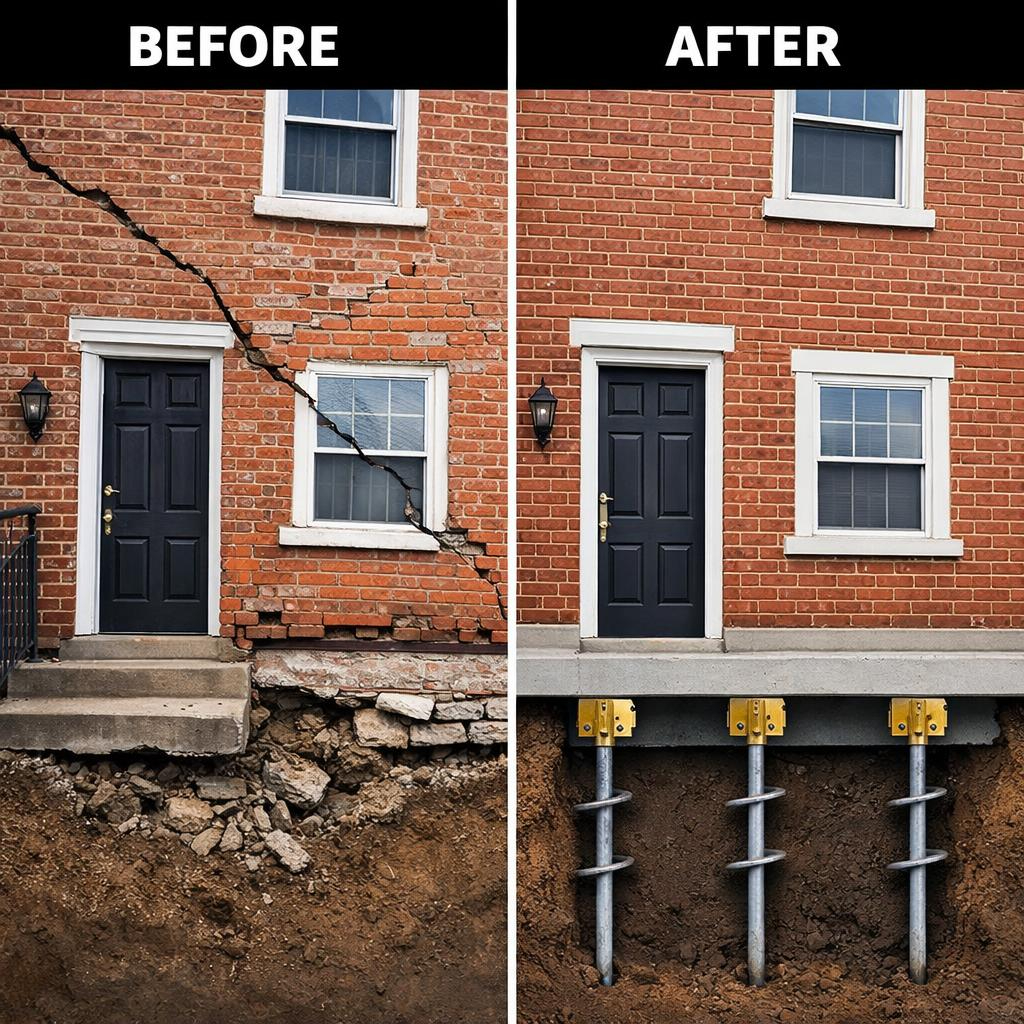
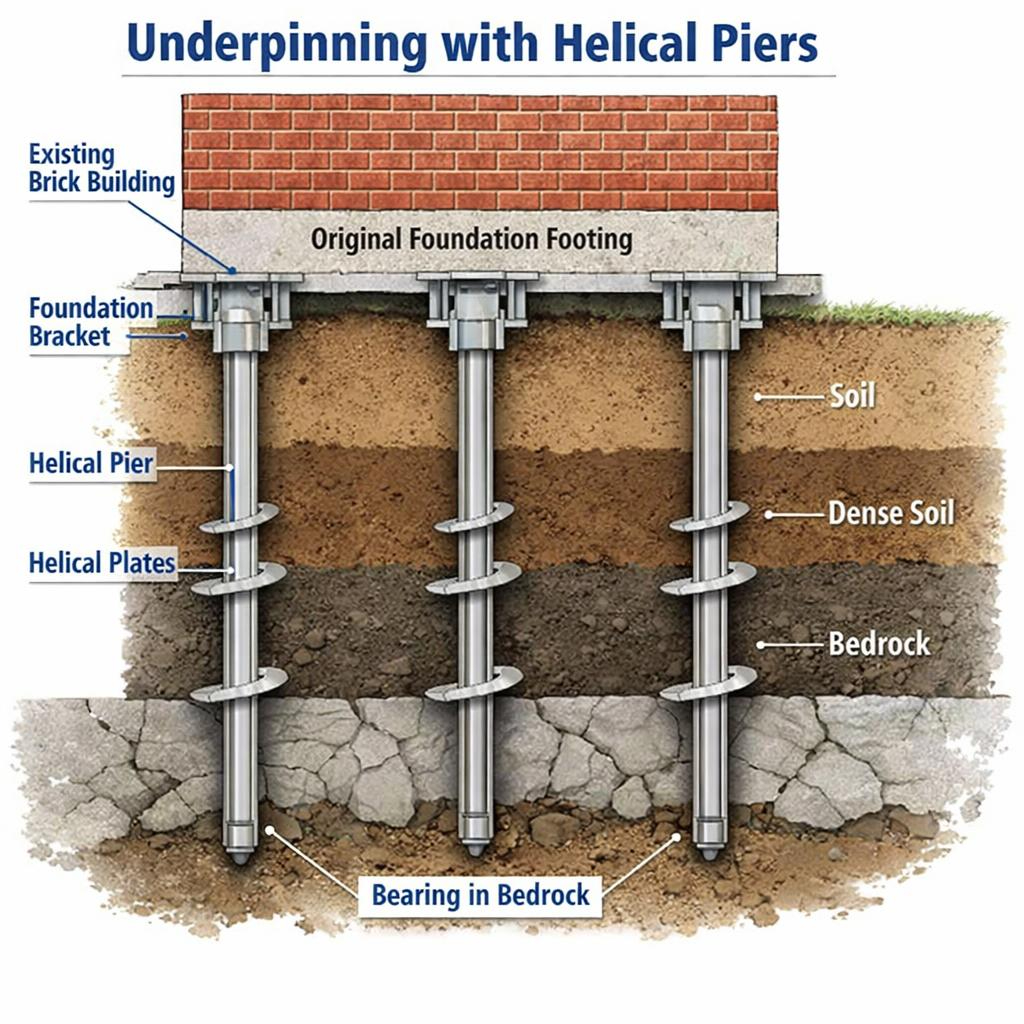
An Underpinning inspection is when a structural engineer monitors excavation work next to existing buildings to make sure neighboring properties don't collapse or settle. Philadelphia requires this whenever you dig deeper than 5 feet within 10 feet of an adjacent structure, which is basically every basement excavation in Fishtown's narrow rowhouse lots. Your contractor digs in small sections, pours concrete to support the neighbor's foundation in each section, then moves to the next section. This process repeats 16-24 times for a typical rowhouse. The engineer must be on-site during excavation and concrete placement for every single section to verify the work protects adjacent buildings. Without this documentation, L&I won't issue your Certificate of Occupancy, and if your neighbor's building settles or collapses, you're liable for all damages.
Make Safe Permits
Certified Civil Engineer
Fully Licensed & Insured
Certified Structural Engineer
What to Expect With Underpinning Inspection

Why Underpinning Inspection Matters
- Section B-1705.1.1.1.1.1 requires continuous inspection by a PA-licensed structural engineer during underpinning operations. "Continuous" means on-site during active work, not after-the-fact. L&I won't issue Certificate of Occupancy without documented inspection for every section. Skip this and you'll have to demolish the underpinning and redo it ($40,000-$80,000), your crew sits idle ($2,000-$5,000/day), and your financing falls through.
- Adjacent building damage is your financial and legal responsibility. Section B-3307.4 states you must preserve and protect adjoining structures at your expense. If your excavation causes your neighbor's building to settle, you pay to repair their foundation ($50,000-$200,000+). Philadelphia averages 300 building collapses per year, many from adjacent excavation undermining foundations. If your neighbor's building collapses and someone gets injured, you face criminal charges plus civil liability.
- Philadelphia adopts 2021 I-Codes on July 1, 2026. All permits filed on or after that date must comply with the new code. Many structural engineers haven't studied the 2021 code yet, so their drawings get rejected by L&I, causing 2-4 week delays and $10,000-$30,000 in demobilization costs while they redo the design.
How StrucTech Handles Underpinning Inspection
- We've completed 47+ underpinning inspections in Fishtown and know soil conditions vary by location (high water table near Delaware River, dense clay west of Frankford Avenue, historic fill in some areas). We document baseline conditions with 100-200 photos on Day 1, measuring and photographing every existing crack in adjacent buildings. This protects you from false damage claims where neighbors try to blame pre-existing damage on your excavation.
- We answer the phone when your GC calls at 6am because concrete trucks are scheduled for 7am. Competitors take 5-10 days to schedule site visits. We schedule within 24-48 hours because we understand construction timelines. Concrete trucks cost $2,000-$3,000 if they show up and can't pour because the inspector isn't there.
- Already trained on 2021 I-Codes that go into effect July 1, 2026. Drawings we submit after that date comply with the new code on first submission. Competitors still using 2018 code will get rejections and have to start over.
Common Questions About Underpinning Inspection
How long does underpinning inspection take?
10-14 calendar days on-site for standard 3-story rowhouse (both sides). Includes Day 1 pre-construction meeting, Days 2-10 active excavation and inspection (on-site every 2-3 days), Days 11-14 final documentation. Total on-site time: 32-96 hours spread over 10-14 days. Weather delays common since we can't inspect open excavations in rain.
Do I need to be present during inspections?
No. We coordinate with your general contractor. GC calls us before each section is ready, we arrive, inspect, approve or identify corrections. You receive copies of reports but don't need to be on-site.
What happens if you find problems during inspection?
We stop the concrete pour until corrections are made. We document the issue with photos and measurements, explain what the code requires, and tell your GC exactly what to fix. GC corrects the problem (usually same day), we re-inspect, then approve the pour. Better to fix it now than have L&I reject your project later or have your neighbor's building collapse.
Can you work evenings/weekends?
Yes. Concrete pours typically happen 6:30am-10am on weekdays. We're available 6am-6pm Monday-Saturday. Sunday and holiday inspections available for premium (emergencies). Weekend work is common in Fishtown because developers want fast completion schedules.
Will inspection damage my property or my neighbor's?
Inspection causes zero damage. We observe and document, not excavate. We take baseline photos on Day 1 showing every existing crack in adjacent buildings. This actually protects you if a neighbor claims damage that existed before you started. The underpinning process itself is designed to prevent damage to adjacent buildings.
Our Simple Step by Step Process
Reliable Structural Engineering & Inspection Services handled start to finish.
DISCOVER WHAT Center City, PA CUSTOMERS HAVE TO SAY ABOUT StrucTech
OUR REVIEWS
REVIEW US
ON GOOGLE

Where We Provide
Underpinning Inspection
Center City, PA
Northern Liberties, PA
University City, PA
Main Line, PA
Graduate Hospital & Point Breeze, PA
South Philadelphia, PA
Center City, PA
Old City & Society Hill, PA
Manayunk & Roxborough, PA
Kensington & Port Richmond, PA
Other Services We Provide
Need something else? Check out the
other services we offer for Structural Engineering & Inspection Services.
What We Can Help You With.
Our Services
Special inspections
Special inspections are when a licensed structural engineer monitors your construction project to verify the work matches approved drawings and meets code requirements. Philadelphia requires this for any project using structural steel beams, concrete slabs, high-strength bolts, or structural welding. The inspector visits your site at critical stages during construction, documents what the contractor built, catches problems before they're covered up, and provides certification to L&I when the work is done. Without this certification, L&I won't issue your Certificate of Occupancy and you can't sell or rent the building. Most Fishtown projects over two stories need special inspections, and your architect lists exactly which inspections are required when they submit your permit application.
Learn More →
Underpinning Inspection
An Underpinning inspection is when a structural engineer monitors excavation work next to existing buildings to make sure neighboring properties don't collapse or settle. Philadelphia requires this whenever you dig deeper than 5 feet within 10 feet of an adjacent structure, which is basically every basement excavation in Fishtown's narrow rowhouse lots. Your contractor digs in small sections, pours concrete to support the neighbor's foundation in each section, then moves to the next section. This process repeats 16-24 times for a typical rowhouse. The engineer must be on-site during excavation and concrete placement for every single section to verify the work protects adjacent buildings. Without this documentation, L&I won't issue your Certificate of Occupancy, and if your neighbor's building settles or collapses, you're liable for all damages.
Learn More →
Foundation Inspections
A Foundation inspection is when a structural engineer assesses your building's foundation to identify problems and estimate repair costs. You need this before buying a property to know what you're getting into, before planning a renovation so your architect knows what they're working with, or when you've discovered problems like cracks in walls, doors sticking, floors sloping, or water coming through the basement. Most Fishtown rowhouses are 100-150 years old with stone or brick foundations from the 1800s-1950s. These foundations were fine when built but often show deterioration now from lime mortar crumbling, stones separating, freeze-thaw damage, or settlement from inadequate footings. The engineer accesses your basement and crawlspace, measures cracks, tests mortar condition, checks for water infiltration, documents settlement, and assesses whether the foundation is structurally adequate. You get an 8-15 page report with photos, detailed findings, and repair recommendations with cost estimates.
Learn More →
Make Safe Permits
Make safe permits are emergency L&I permits required when a building partially collapses, shows imminent collapse signs, or gets red-tagged as unsafe. When L&I red-tags a building under Section 110, you must obtain a make safe permit to perform emergency stabilization work like installing shoring, bracing walls, removing dangerous elements, or partial demolition. This permit requires a Pennsylvania-licensed structural engineer to design the emergency work, provide stamped drawings, supervise the stabilization, and certify completion to L&I. The make safe permit is processed on an emergency basis, typically issued within 24-48 hours rather than the normal 2-4 week permit review. Philadelphia averages 300 building collapses per year, many in Fishtown from adjacent excavation damage, roof overloading, fire damage, or century-old buildings deteriorating. Most make safe permit applications happen between 11pm and 3am when buildings collapse during construction, storms, or snow loading events.
Learn More →
Emergency Structural Engineering
Emergency structural engineering is the immediate response when your contractor discovers structural failure during renovation, a load-bearing element fails unexpectedly, or you need same-day structural assessment to keep your project moving. This is when you call us directly because your contractor removed what they thought was a non-load-bearing wall and the second floor sagged 2 inches, opened a wall and found severe termite damage, discovered the existing beam is undersized for the addition you're building, or noticed floor joists rotting where they meet the foundation. In Fishtown's 1800s-1950s rowhouses, contractors frequently discover hidden structural problems during demolition because previous homeowners covered problems with drywall rather than fixing them. The engineer responds within 2-4 hours, assesses damage on-site, designs temporary stabilization for the same day so your contractor can continue working tomorrow, and provides permanent repair drawings within 3-7 days so your project stays on schedule.
Learn More →
Slab Inspection
Mat slab inspection is the code-required inspection by a structural engineer before your contractor pours the foundation slab for new construction or basement excavation projects. Philadelphia Building Code Table 1705.3 requires special inspection of concrete reinforcement placement for most projects, with limited exceptions for simple 1-2 story buildings. Most Fishtown new construction like 3-4 story townhouses and Front Street mixed-use buildings require mat slab inspection. Your contractor excavates to foundation depth, installs vapor barrier and compacted stone base, places reinforcing steel in a rebar grid, and calls the engineer for inspection. The engineer arrives before concrete trucks (typically 6:30am for 7am pour), inspects rebar size, spacing, and cover distances, verifies excavation depth and preparation, approves or identifies corrections, and documents with photos. The contractor proceeds with concrete pour only after engineer approval, and the engineer submits a report to L&I for the permit file.
Learn More →
Concrete & Rebar Inspection
Concrete and rebar inspection is the special inspection required by Philadelphia Building Code Table 1705.3 for elevated slabs, concrete columns, concrete walls, beams, and any structural concrete element beyond simple ground-level foundations. Most Fishtown new construction projects require multiple concrete inspections throughout construction as each floor or structural element is formed and poured. This is different from mat slab inspection which is a one-time inspection before foundation pour. Concrete and rebar inspection happens repeatedly during construction as each floor slab, column, or wall is built. Your contractor builds formwork (temporary wooden forms that hold wet concrete), installs reinforcing steel per structural drawings, calls the engineer for inspection before pouring, and the engineer approves so concrete can be placed. This repeats for each floor slab, each column, and each wall that contains structural concrete, typically requiring 3-8 inspections for a 3-story Fishtown townhouse or 12-24+ inspections for larger buildings.
Learn More →
Structural Steel Inspection
Structural steel inspection is the special inspection required by Philadelphia Building Code Table 1705.2 when your project uses steel beams, columns, or structural frames. Most Fishtown renovation projects remove load-bearing walls to create open floor plans by installing steel I-beams to support the second floor. Most Front Street new construction uses structural steel frames with steel beams and columns supporting concrete slabs in 4-6 story mixed-use buildings. Table 1705.2 distinguishes between continuous inspection where the engineer is on-site during the entire operation (required for welded moment connections and high-strength bolted connections) and periodic inspection with scheduled visits (allowed for standard bolted connections and simple welds). Your contractor orders steel from a fabricator, steel is delivered to site, a crane lifts beams into place, connections are bolted or welded, and the engineer inspects at multiple stages. Typical steel projects require 2-4 inspections for small residential beam installations to 12-24+ inspections for large multi-story steel frame buildings.
Learn More →
Facade Inspection (5-Year)
Facade inspection is the code-required inspection every 5 years for buildings over 3 stories or 40 feet tall per Philadelphia Code Chapter 14-1600. This applies to many Fishtown buildings including converted mills that are 4-6 stories, Front Street mixed-use developments that are 4-8 stories, and some taller rowhouses with pilot-house construction pushing height over 40 feet. A Pennsylvania-licensed Professional Engineer or Registered Architect must inspect the entire building exterior including walls, parapets, cornices, balconies, fire escapes, signs, and awnings looking for deterioration, loose elements, cracks, spalling where concrete or brick breaks off, and any conditions that could cause falling debris. The inspection requires close-up access using aerial lift, scaffolding, or rope access for tall buildings, photo documentation of all defects, and a stamped report submitted to L&I certifying the building is safe or identifying required repairs. Buildings overdue for inspection receive L&I violations with accumulating fines until inspection is complete.
Learn More →
Excavation Shoring Inspection
Excavation shoring inspection is the code-required monitoring by a structural engineer when your contractor digs deeper than 5 feet and uses temporary support systems called shoring to prevent cave-ins. OSHA and Philadelphia Building Code require shoring for excavations over 5 feet deep or when excavating near existing structures to prevent soil from collapsing into the excavation, protect workers from being buried alive, and prevent adjacent buildings from settling. Most Fishtown basement excavations that lower basement floors to add ceiling height or dig new basements under existing buildings require shoring because you're digging 8-12 feet deep and working within inches of adjacent rowhouse foundations. Typical shoring systems are steel sheet piling with interlocking steel sheets driven into ground, soldier piles and lagging with vertical steel beams and horizontal wood planks, or trench boxes as steel cages protecting workers inside excavation. Your contractor installs shoring, the engineer inspects before excavation proceeds, the engineer monitors during excavation, and the engineer certifies shoring performed adequately.
Learn More →
Structural Load Analysis
Structural load analysis is the engineering calculation required when you're adding loads to an existing building or when your architect needs to verify existing structure can support proposed changes. Most Fishtown renovation projects involve structural modifications like removing walls between living room and kitchen to create open floor plan requiring beam to carry second floor load, adding third-floor addition or pilot house where existing structure must support additional story, converting rowhouse to multi-unit rental with heavier occupancy loads, or building rooftop deck where existing roof structure designed for snow only not people and furniture and planters. The engineer calculates existing structural capacity, calculates new loads being added, determines if existing structure is adequate, and designs strengthening if needed with new beams, columns, or foundation upgrades. Deliverables are stamped structural drawings showing required modifications and calculations for L&I permit review. This service is separate from inspection services which verify contractor builds what's on the drawings.
Learn More →
Building Structural Assessment
Building structural assessment is the comprehensive evaluation of your entire building's structural system before major renovations, after discovering problems, for property purchase due diligence, or when converting building use. Most Fishtown building assessments happen when developers buy older rowhouses sight-unseen at auction needing to know actual repair costs before committing capital, architects discover hidden damage during design phase like opened walls and found termite damage or rotted framing or previous unpermitted modifications, or property owners plan gut renovations wanting to know what structural surprises await before setting budgets. The engineer inspects foundation to roof including basement walls and floor framing and load-bearing walls and roof structure, identifies all structural deficiencies, categorizes by severity, and provides repair recommendations with cost estimates. This is different from foundation inspection which focuses only on foundation or pre-purchase home inspection which is general not structural-specific. Building structural assessment is engineering-level detailed inspection with stamped report typically 30-80 pages.
Learn More →Not sure what you need?
Call us at +1 267-310-1172 and we'll help you figure it out.
Ready to Move Forward?
If you need Underpinning Inspection
or unsure and have questions let's talk.
We'll answer your questions, provide a clear estimate, and schedule a time that works for you.
Unable to find form
BUSINESS
SERVICES
SERVICE AREAS
OPERATING HOURS
Sun: 7:00 AM - 3:00 PM
Mon: 7:00 AM - 3:00 PM
Tue: 7:00 AM - 3:00 PM
Wed: 7:00 AM - 3:00 PM
Thu: 7:00 AM - 3:00 PM
Fri: 7:00 AM - 3:00 PM
Sat: 7:00 AM - 3:00 PM